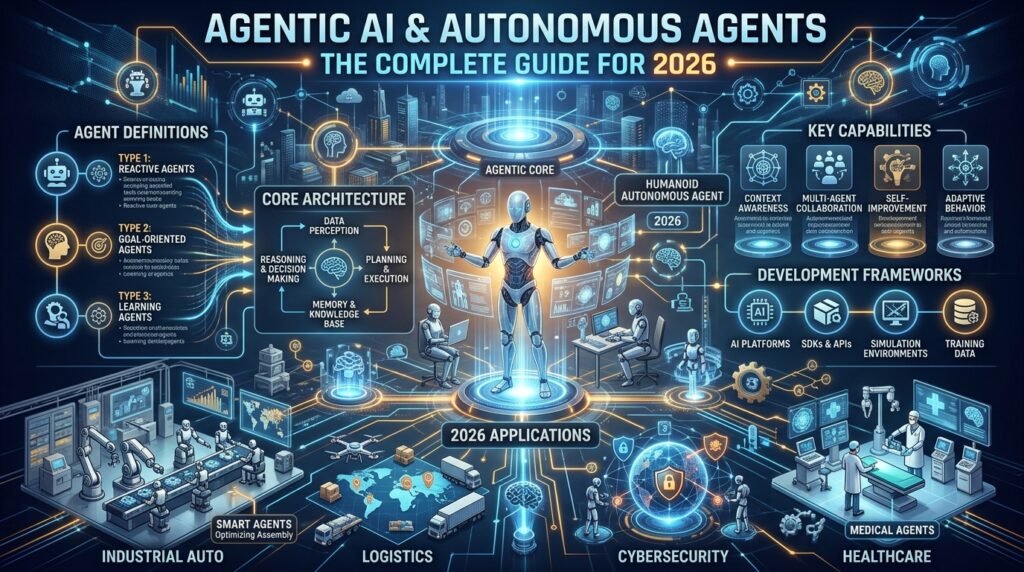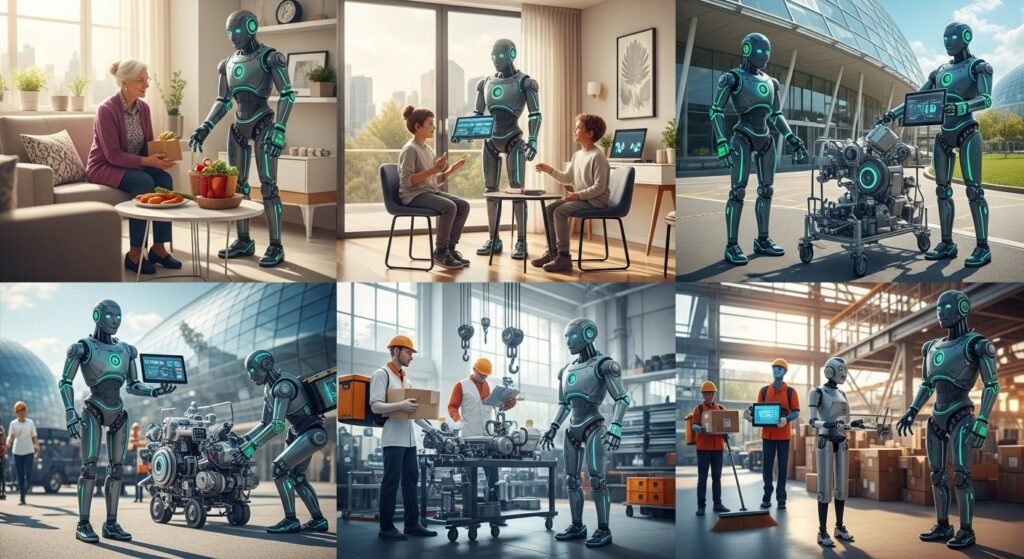
Humanoid Robots: The Future of AI and Automation
Discover how humanoid robots are transforming industries, daily life, and the future of work. Explore top models, use cases, benefits, and what experts say. Humanoid Robots: The Future of AI and Automation in 2026 and Beyond Humanoid robots are no longer science fiction. They are walking into warehouses, hospitals, and research labs right now. In 2025, the race to build the perfect human-like robot has reached a fever pitch — and the implications for every industry on the planet are staggering. From Tesla’s Optimus to Boston Dynamics’ Atlas, humanoid robots are being designed to think, move, and work alongside humans. According to Goldman Sachs, the humanoid robot market could reach $38 billion by 2035. That number alone tells you just how seriously the world is taking this technology.In this guide, we break down everything you need to know about humanoid robots — what they are, how they work, who is building them, what they cost, and what the future looks like. Whether you are a tech enthusiast, a business owner, or just curious, this article has answers. Table of Contents 1. What Are Humanoid Robots? A humanoid robot is a robot that closely resembles the human body in shape and function. It typically has a head, torso, two arms, and two legs. These machines are designed to interact with human environments — using the same tools, navigating the same spaces, and sometimes performing the same tasks. Unlike traditional industrial robots that are bolted to factory floors, humanoid robots are mobile. They can walk, climb stairs, pick up objects, and even make decisions using artificial intelligence. Key Characteristics of Humanoid Robots The term ‘android’ is sometimes used for humanoid robots that look extremely human-like, though in engineering, the two terms are often used interchangeably. The primary goal is the same: build a machine that can operate in any environment built for humans. 2. How Do Humanoid Robots Work? Building a humanoid robot is one of the hardest engineering challenges in the world. It requires advances across multiple disciplines — mechanics, electronics, computer vision, and artificial intelligence — all working together in real time. The Core Systems Behind Humanoid Robots A key insight from researchers at MIT’s Computer Science and Artificial Intelligence Laboratory (CSAIL): the hardest part is not making a robot move — it is making it move intelligently in unpredictable environments. That is where AI integration becomes the true differentiator. 3. Top Humanoid Robot Companies in 2025 The humanoid robotics space is crowded and competitive. These are the companies leading the charge right now. Tesla — Optimus Elon Musk’s Tesla entered the humanoid robot race officially in 2022 and has moved fast. The Optimus robot (also called Tesla Bot) is designed for general-purpose labor. As of 2025, Optimus Gen 2 stands 5’8″, weighs 128 lbs, and can walk at 5 mph. Tesla is targeting a price below $20,000 for mass production. The robot uses Tesla’s FSD (Full Self-Driving) AI stack, making it one of the most software-advanced units in development. Boston Dynamics — Atlas Boston Dynamics has been building robots since 1992 and is widely considered the industry pioneer. The electric Atlas robot (third generation) is arguably the most mechanically capable humanoid robot in the world. Atlas can perform backflips, parkour, and precise manipulation tasks. Boston Dynamics transitioned Atlas to commercial use in 2024, partnering with manufacturers for real-world deployment. Figure AI — Figure 01 and Figure 02 Figure AI, backed by investors including Microsoft, OpenAI, and Jeff Bezos, has raised over $700 million. Their Figure 02 robot integrates OpenAI’s GPT-4 model for natural language understanding. In early demos, Figure 02 demonstrated real-time reasoning and task completion in a way no previous commercial robot had achieved. Agility Robotics — Digit Agility Robotics partnered with Amazon to deploy its Digit robot in fulfillment centers. Digit focuses on logistics tasks — picking up totes, moving materials, and working alongside human employees. Amazon’s warehouse deployment is one of the first large-scale real-world tests of humanoid robots in industrial settings. Unitree Robotics — H1 and G1 China-based Unitree has positioned itself as the affordable alternative. The Unitree G1 humanoid robot starts at approximately $16,000 — a fraction of the cost of competitors. While it lacks some advanced capabilities, Unitree’s pricing strategy could be a major disruptor in making humanoid robots accessible to smaller companies. Internal Link Suggestions Recommended External Authority Sources
Humanoid Robots: The Future of AI and Automation Read More »