What if your AI didn’t just answer questions — but actually got things done on its own?
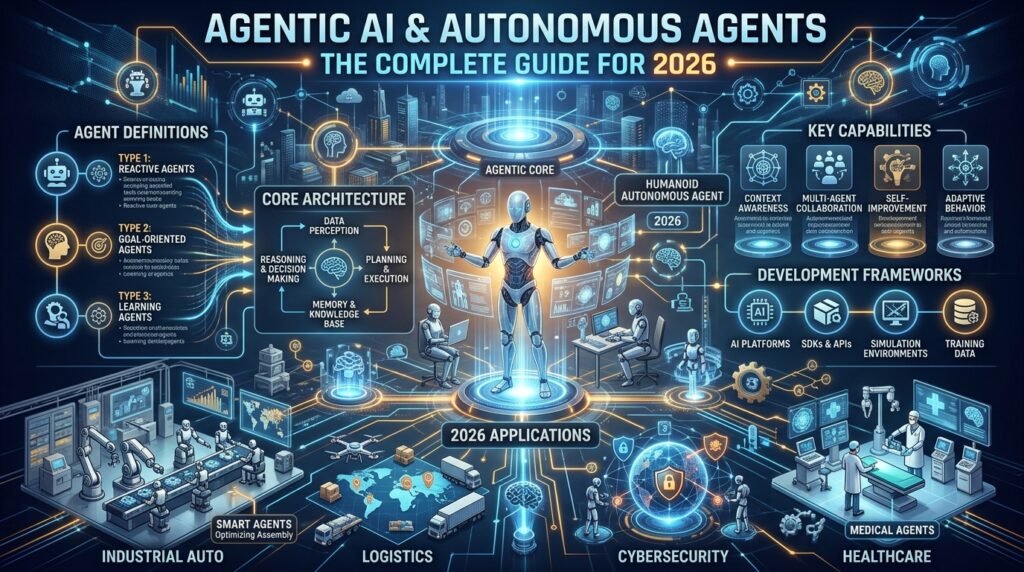
That’s the promise of agentic AI & autonomous agents — and it’s no longer science fiction. In 2026, these intelligent systems are reshaping industries, automating complex workflows, and making decisions that once required human judgment.
Whether you’re a developer, business owner, or tech enthusiast, understanding agentic AI is no longer optional. It’s essential.
In this guide, you’ll discover exactly what agentic AI & autonomous agents are, how they work, who’s using them, and where they’re headed. Let’s dive in.
Table of Contents
- 1. What is Agentic AI?
- 2 . How Autonomous Agents Work: Key Components
- 3. Types of Autonomous Agents
- 4 . Top Use Cases in 2026
- 5 . Best AI Agent Frameworks
- 6 . Benefits for Business
- 2 . How Autonomous Agents Work: Key Components
1. What Are Agentic AI & Autonomous Agents?
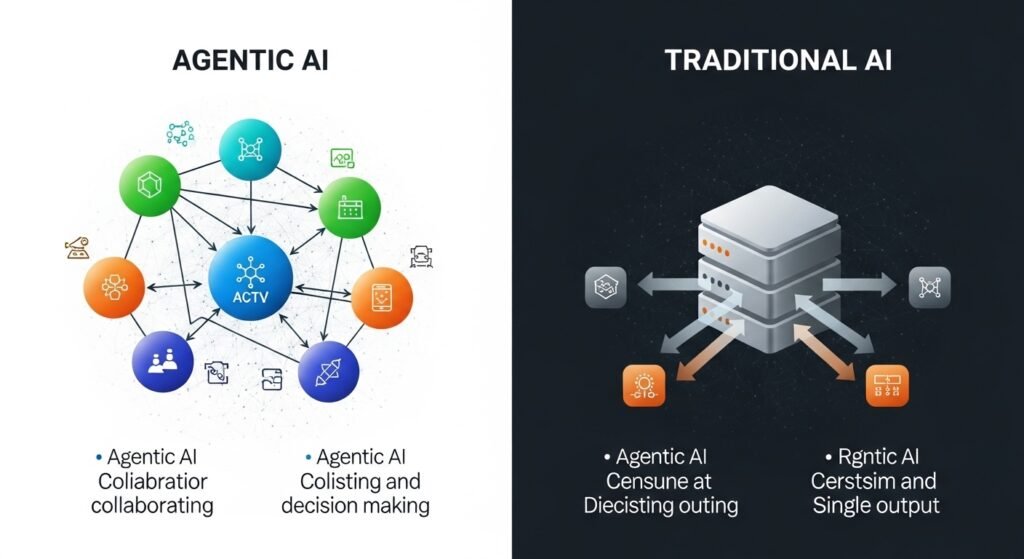
Agentic AI refers to AI systems that can autonomously pursue goals, make decisions, and take sequences of actions in the real world — without needing a human to direct every step. Unlike traditional AI tools that respond to a single input and stop, an agentic system can plan ahead, use tools, and adapt its strategy based on results. Think of it this way: a regular AI chatbot is like a vending machine — you press a button and get one result. An agentic AI is more like a smart employee — you give it an objective, and it figures out how to achieve it.

Agentic AI vs. Traditional AI
- Traditional AI: Single input → single output. Static. No memory between turns.
- Agentic AI: Goal-directed. Multi-step. Persistent memory. Calls tools and APIs. Can
spawn sub-agents.
REAL EXAMPLE
You give an agentic AI the goal — ‘Research the top 10 SaaS tools for HR, compare
pricing, and draft a report.’ It will search the web, visit websites, extract data, organize it in a
table, and write the report — all on its own
- 2. How Autonomous Agents Work
- At their core, autonomous agents follow a loop called the Observe → Think → Act cycle
- (also called the “ReAct” loop — Reason + Act), a concept popularized in AI research by Yao et al. in 2022.
- Observe: The agent perceives its environment — a task description, search results, a
file, or feedback from a previous action. - Think: It uses an LLM to reason about what to do next and create a plan.
- Act: It takes an action — searching the web, calling an API, writing code, sending an
email, or calling another agent. - Evaluate: It checks if the result moved it closer to the goal. If not, it tries again.
This loop can run dozens or hundreds of times until the goal is complete. Modern agentic
Systems use memory (short-term and long-term), tool use, and planning modules to make this
process efficient and reliable
- Key Components of Agentic AI & Autonomous Agents
Core Building Blocks
- LLM Brain: The reasoning engine (GPT-4, Claude 3, Gemini 1.5, etc.) that understands
goals and creates plans. - Memory: Short-term context within a session; long-term memory stored in a vector
databases like Pinecone or Weaviate. - Tool Use: Web search, code execution, file reading, database queries, API calls, email
sending. - Planning Module: Breaks down big goals into smaller sub-tasks and assigns them in
order. - Feedback Loop: Evaluates outputs and corrects the course if something goes wrong.
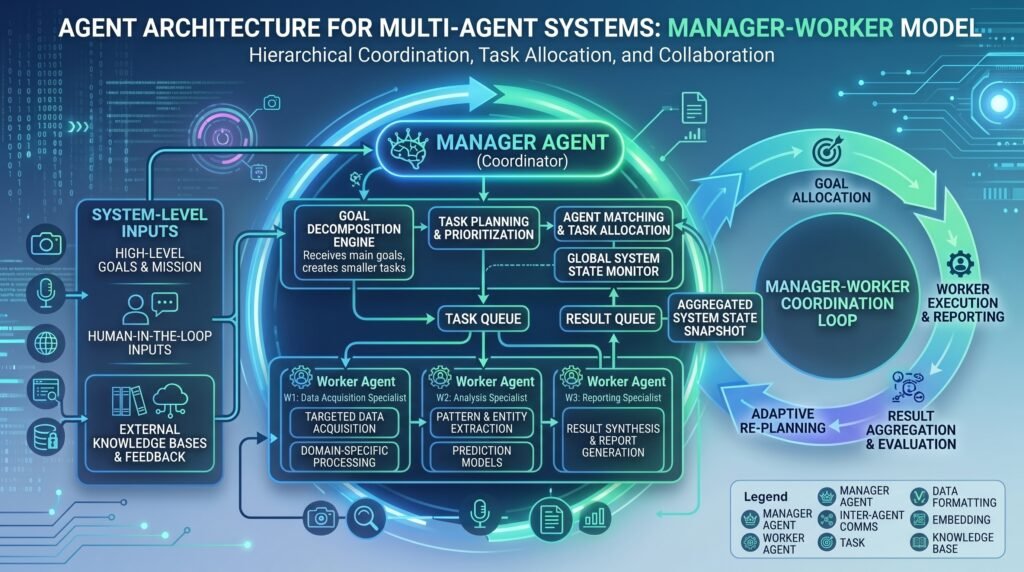
- Multi-Agent Orchestration: One “manager” agent assigns specialized tasks to other
“worker” agents
EXPERT INSIGHT
The real breakthrough in agentic AI is not the LLM itself — it is the orchestration layer. Tools
like LangGraph, CrewAI, and AutoGen allow developers to build reliable, multi-agent
pipelines that can handle real business complexity.
- Types of Autonomous Agents by Architecture
- Single-Agent Systems: One AI that handles the entire task. Best for focused,
well-defined goals. - Multi-Agent Systems (MAS): Multiple specialized agents collaborating. One plans, one
research, one writes, one reviews. - Hierarchical Agents: A manager agent delegates to worker agents. Mimics how teams
work in a company. - Reflexive Agents: Respond to immediate inputs without planning ahead. Fast but
limited. - Goal-Based Agents: Work backward from an end goal to figure out the right steps.
- Learning Agents: Improve their strategy over time using feedback and reinforcement
learning.
- 5 . Top Use Cases for Agentic AI in 2026
The applications of agentic AI and autonomous agents are expanding fast across industries. Here are the most impactful ones being deployed today:
- Business & Productivity
-
- Automated research reports and competitive analysis
- Drafting and sending personalized sales outreach
- Managing calendars, booking meetings, and follow-ups
- Processing invoices and expense reports end-to-end
Software Development - Writing, testing, and debugging code autonomously
- Resolving GitHub issues from ticket to pull request
- Generating full web applications from a text prompt
- Running automated QA cycles with self-healing tests
Customer Service - AI agents that resolve Tier 1 and Tier 2 support tickets
- Proactive outreach to customers before issues escalate
- Real-time order tracking and return management
Healthcare - Summarizing patient records for doctors before appointments
- Monitoring patients remotely and flagging anomalies
- Drug interaction research and literature review
- Drafting and sending personalized sales outreach
- Automated research reports and competitive analysis
- Best AI Agent Frameworks in 2026
Choosing the right framework is critical when building agentic AI systems. Here are the
Leading options developers use in 2026:
- LangGraph (LangChain): Stateful, graph-based agent workflows. Best for
production-grade pipelines. - CrewAI: Role-based multi-agent system. Great for team-like collaboration between
agents. - AutoGen (Microsoft): Conversational multi-agent framework ideal for code generation
tasks. - OpenAI Assistants API: Native tool use, file handling, and memory — simple but
powerful. - Anthropic Claude Tool Use: Precise, reliable tool-calling with strong reasoning and
safety properties. - AgentKit (Coinbase): Purpose-built for blockchain and financial agent actions.
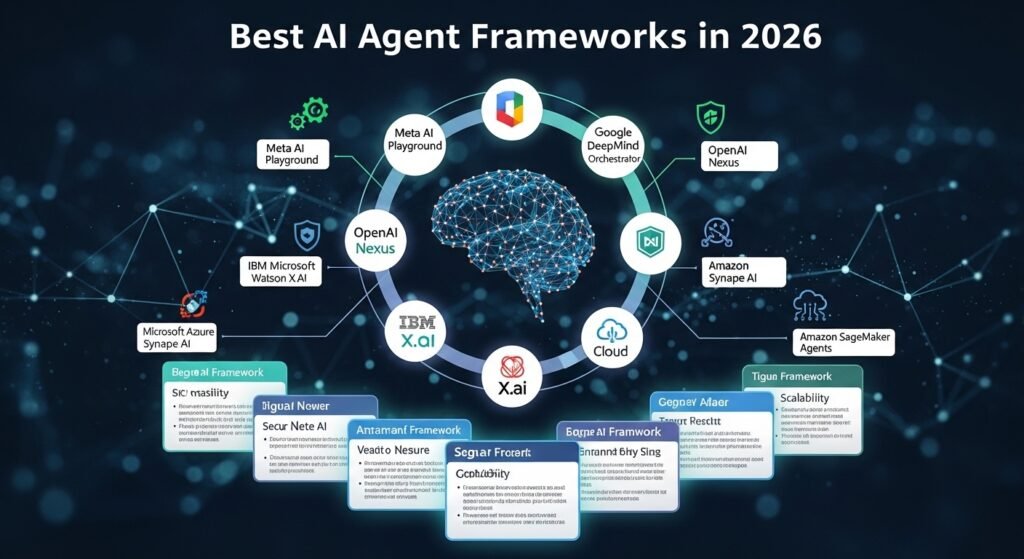
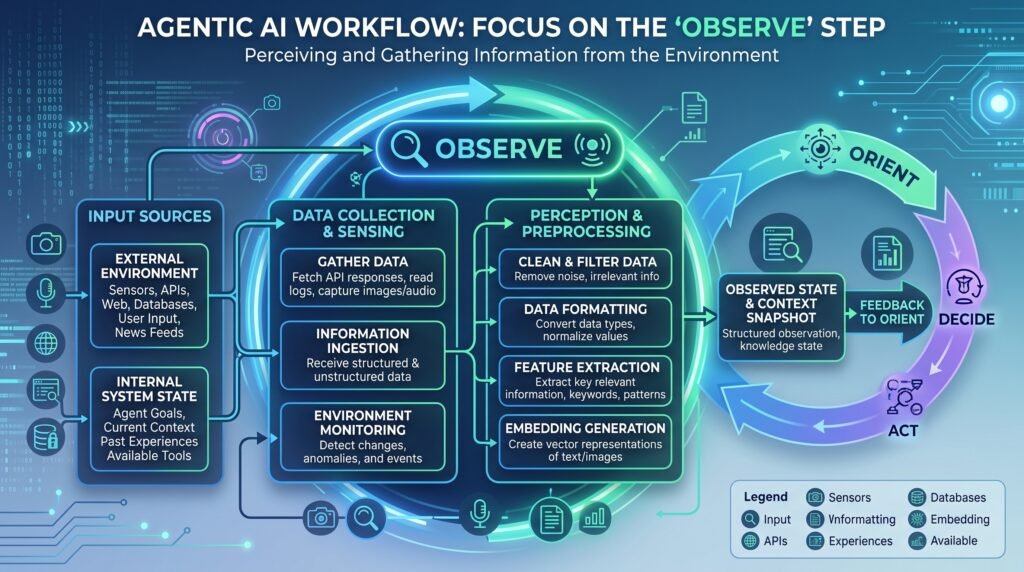
Image 2: Multi-agent system architecture with manager and worker agents. ALT: “Multi-agent AI system
architecture diagram.”
Image 3: Comparison infographic: AI Agent vs Chatbot vs Traditional Automation. ALT: “Agentic AI vs
Chatbot vs. traditional automation comparison.”
Image 4: Bar chart of agentic AI market growth 2023-2027. ALT: “Autonomous AI agents market growth
Statistics 2026″
Image 5: Screenshot of an AI agent completing a research task in real-time. ALT: “Autonomous AI
agent completing research task example.”
Internal Link Ideas
12. Media Optimization & Link StrategySuggested Images (with ALT Text)
→ What is a Large Language Model (LLM)? Beginner’s Guide
→ Best AI Tools for Business Productivity in 2026
→ How to Use LangChain for AI Automation (Step-by-Step)
→ AI vs Machine Learning vs Deep Learning: Key Differences
→ Top 10 AI Trends Shaping Enterprise Technology in 2026
External Authority Sources
MarketsandMarkets —
AI Agents Global Market Report 2024–2027 (marketsandmarkets.com)
Stanford HAI —
Human-Centered AI research on agentic systems (hai.stanford.edu)
MIT Technology Review —
‘The Rise of AI Agents’ (technologyreview.com)