Table of Contents
1. Introduction — The New World of Work
2. What Is the Gig Economy? A Clear Definition
3. How Technology Powers the Gig Economy
4. Top Gig Economy Platforms Driven by Tech
5. Key Statistics: The Gig Economy by the Numbers
6. Benefits of the Gig Economy and Tech Convergence
7. Challenges Facing Gig Workers in the Digital Age
8. The Future of Work: Where the Gig Economy Is Heading
9. Expert Tips for Thriving as a Gig Worker
10. Common Mistakes Gig Workers Make (and How to Avoid Them)
11. FAQ — People Also Ask
12. Conclusion & Call to Action
13. Media, Internal & External Link Recommendations
1. Introduction — The New World of Work
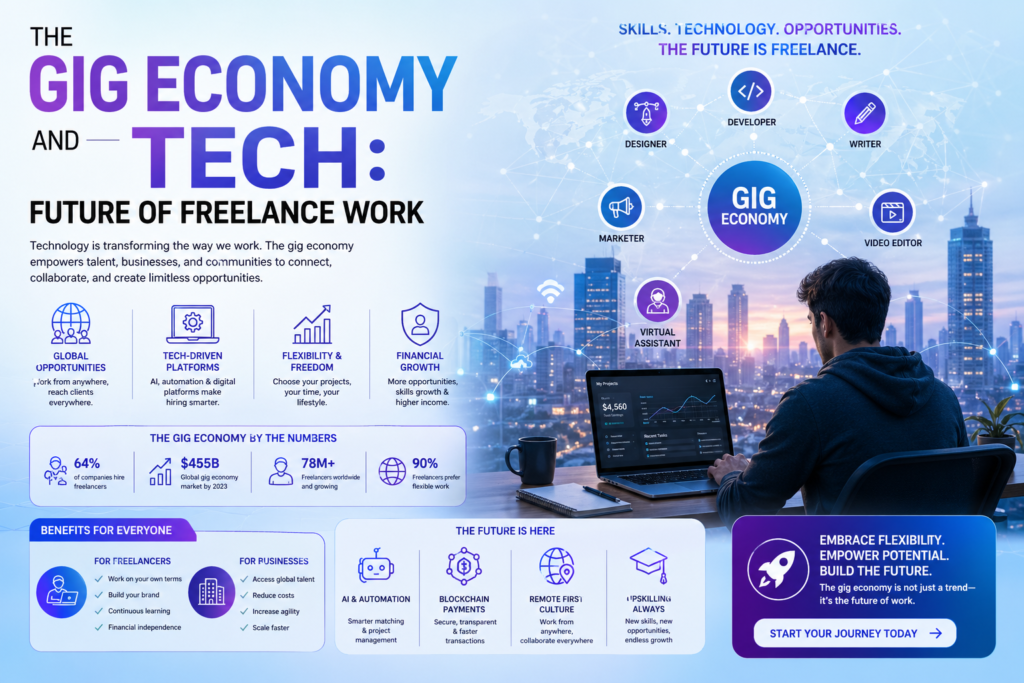
Picture this: you wake up, grab your phone, and decide what kind of work you want to do today. No manager checking in, no fixed schedule, no rush-hour traffic. For more than 1.5 billion people worldwide, this isn’t a fantasy—it’s daily life.
The rise of the gig economy, powered by rapid technological advancement, is transforming how people earn a living. From freelance developers and graphic designers to delivery drivers and online tutors, millions now rely on digital platforms to find work and get paid. Technology sits at the center of it all—mobile apps connect workers with clients, AI tools match skills to tasks, and digital payment systems ensure quick, seamless transactions across borders.
What started as a flexible side hustle has grown into a massive global market worth hundreds of billions of dollars—and it’s still expanding. This shift is not just changing jobs; it’s redefining the very concept of employment.
In this article, we’ll explore how technology and the gig economy are shaping each other, what this means for both workers and businesses, and how you can take advantage of the opportunities while avoiding common pitfalls. By the end, you’ll have a clear understanding of where this trend is heading—and how to stay ahead of it.
2. What Is the Gig Economy? A Clear Definition
The term gig economy refers to a labor market where short-term contracts and freelance work replace
traditional permanent employment. Instead of a 9-to-5 job with a single employer, workers take on multiple assignments — or ‘gigs’ — often through digital platforms.
The gig economy covers three broad categories:
| Category | Description | Example |
|---|---|---|
| On-demand services | Immediate local task fulfillment | TaskRabbit, DoorDash, Postmates |
| Platform-based | Work sourced through apps or websites | Uber, Fiverr, Upwork |
| Freelance / Contract | Independent professional services | Copywriting, Web Dev, Design |
3. How Technology Powers the Gig Economy
3.1 Mobile Apps and On-Demand Platforms
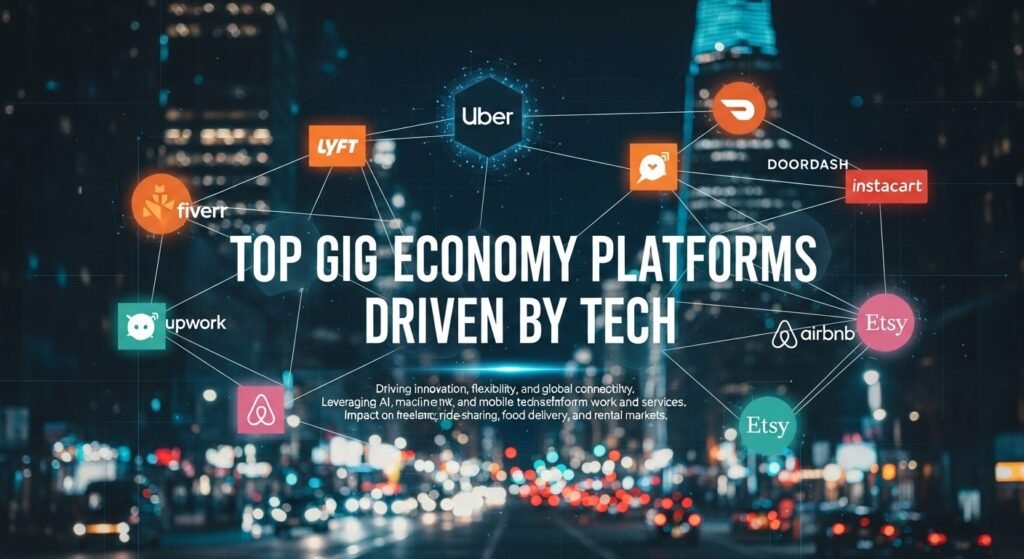
The smartphone revolution made gig work accessible to anyone, anywhere. Mobile apps like Uber, Lyft,
Instacart and Fiverr allow workers to sign up, get verified, and start earning within hours. Real-time GPS, push
notifications, and in-app communication make the logistics of on-demand work seamless for both workers and
clients.
3.2 Artificial Intelligence and Smart Matching
Artificial intelligence works quietly behind the scenes of most major gig platforms. It processes data such as user profiles, past ratings, location, and availability to connect workers with suitable opportunities. This intelligent system helps clients find the right talent faster, enables workers to access more relevant jobs, and improves the platform’s overall efficiency.
■ Personalized job recommendations based on skills and history
■ Dynamic pricing models (surge pricing) that respond to real-time demand
■ Fraud detection and identity verification for platform safety
■ Customer review systems that build digital reputation and trust
3.3 Cloud Computing and Remote Collaboration
Cloud-based platforms such as Google Workspace, Notion, Slack, Zoom, and GitHub make it possible for freelancers to work seamlessly with clients from anywhere in the world. These tools remove the need for physical presence, enabling real-time communication, file sharing, and project management across different time zones. At the same time, cloud storage keeps important documents, project files, and deliverables securely stored, easy to access, and well-organized at all times.
3.4 Digital Payments and Financial Technology
Receiving payments was once one of the biggest challenges for freelancers, often involving delays, high fees, and complicated processes. Today, financial technology has made it much smoother. Services like PayPal, Stripe, and Wise, along with cryptocurrency wallets, enable fast and seamless transactions across borders. In addition, many platforms now include built-in features such as escrow protection, automated invoicing, and tax management tools, making it much easier for freelancers to handle their finances efficiently.
3.5 Blockchain and Smart Contracts
New advances in blockchain are beginning to change how trust works in the gig economy. With smart contracts, payments can be triggered automatically once agreed conditions are met and recorded on the blockchain. This reduces reliance on middlemen, minimizes disputes, and creates a more transparent and reliable payment system for freelancers across the globe.
4 . Top Gig Economy Platforms Driven by Tech
5. Key Statistics: The Gig Economy by the Numbers
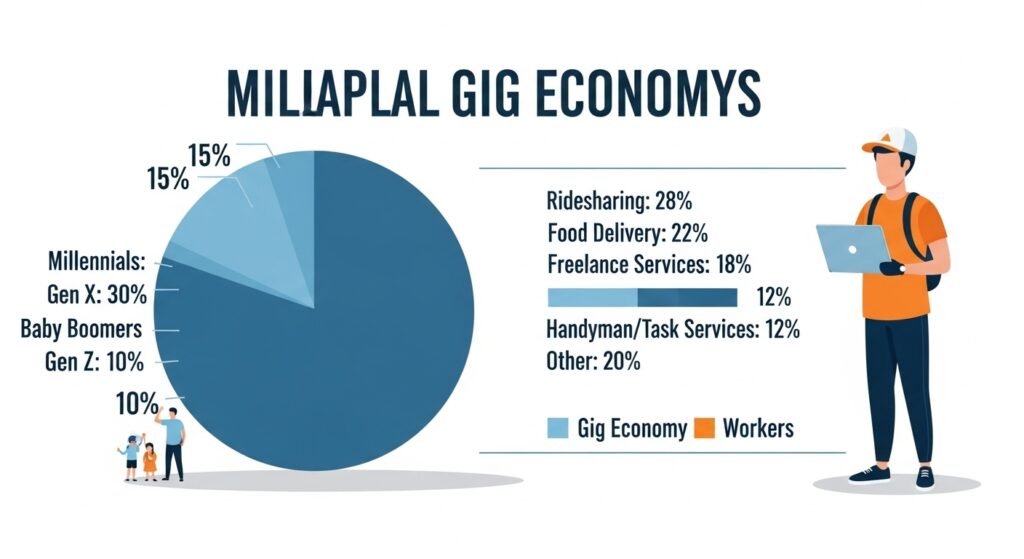
Numbers tell the real story of how massive and fast-moving the gig economy and tech convergence truly is
6. Benefits of the Gig Economy and Tech Convergence
The marriage of the gig economy and tech creates value for workers, businesses, and entire economies. Here
is a balanced look at the key advantages:
For Workers
✔ Flexibility: Work when, where, and how much you want. Studies show flexibility is the #1 reason workers
choose gig roles.
✔ Global clients: Tech platforms remove geographic barriers — a developer in Pakistan can easily serve
clients in the United States.
✔ Income diversification: Workers can combine multiple gigs to build a stable, diverse income stream.
✔ Skill monetization: Niche skills that were hard to market locally are now globally sellable.
✔ Low entry barriers: Starting is fast — create a profile, list your skills, and begin earning within days.
For Businesses
✔ Cost efficiency: Hire project-based talent instead of full-time employees, reducing overhead significantly.
✔ Speed: Access vetted, skilled professionals within hours rather than weeks.
✔ Scalability: Scale your workforce up or down based on project demand without HR complexity.
✔ Innovation: Fresh external perspectives from gig workers often inject new ideas into teams.
7. Challenges Facing Gig Workers in the Digital Age
While the gig economy and tech offer exciting opportunities, they also come with real challenges that workers
need to navigate carefully.
■ Income Instability: Gig income can be unpredictable — feast or famine cycles are common, especially for
new workers still building their client base.
■ No Benefits or Protections: Most gig workers lack employer-provided health insurance, retirement plans,
or paid leave — critical safety net gaps.
■ Algorithm Dependency: Platform algorithms control visibility. A drop in ratings or a platform update can
instantly reduce a worker’s income without explanation.
■ Isolation and Mental Health: Without a traditional office environment, many gig workers report loneliness
and difficulty separating work from personal life.
■ Data Privacy Risks: Using multiple apps means sharing personal data with many companies — raising
concerns about surveillance and data misuse.
■ Tax Complexity: Self-employed gig workers must handle their own taxes, which can be complex and costly
without professional guidance.
8. The Future of Work: Where the Gig Economy Is Heading
The gig economy is not a temporary trend — it is a structural shift in how global work operates. Several
Powerful forces are driving its continued growth:
- AI-Augmented Gig Work
Rather than replacing gig workers, AI tools like ChatGPT, Midjourney, and GitHub Copilot are helping them
deliver higher-quality work faster, making top freelancers significantly more productive. - The Creator Economy Boom
Platforms like YouTube, Substack, TikTok, and Patreon represent a new gig economy layer where content
creators monetize skills directly, bypassing traditional employment entirely. - Decentralized Platforms (Web3)
Blockchain-based gig platforms aim to give workers ownership stakes and eliminate platform fees, shifting
power from corporations to workers.
FAQ — People Also Ask
These are the most common questions people search for about the gig economy and tech:
Q: What is the gig economy, and how does technology support it?
A: The gig economy is a labor market built on short-term, flexible work arrangements rather than
permanent employment. Technology supports it through mobile platforms, AI-powered matching
systems, digital payment tools, and cloud collaboration software that connect workers with clients
instantly, often without geographic limits.
Q: Is the gig economy good or bad for workers?
A: It depends on the worker’s circumstances. The gig economy offers real advantages —
flexibility, autonomy, and global earning potential. However, it also comes with downsides like
income instability, no employer benefits, and algorithm dependency. Workers with strong skills,
financial discipline, and good platform strategies tend to thrive, while those without a plan can
struggle.
Q: Which technology skills are most in demand in the gig economy?
A: Currently, the highest-paying tech-related gig skills include web and app development,
AI/machine learning consulting, cybersecurity, UI/UX design, video production, SEO and digital
marketing, data analysis, and no-code/low-code automation. The demand for AI-related skills in
particular has surged dramatically since 2022.
Q: How do gig economy platforms make money?
A: Most gig platforms use a commission or service fee model — they take between 5% and 20%
of every transaction made through their system. Some platforms also charge subscription fees for
premium worker or client features, and others generate revenue through advertising or
lead-generation models.
12. Conclusion & Call to Action
The relationship between the gig economy and tech is one of the most defining forces shaping work in the 21st century
. Technology has democratized access to global opportunities, lowered barriers to entry, and given
billions of people the power to build income on their own terms.
Whether you are considering your first freelance gig or you are a seasoned independent professional looking to
scale, the core message is clear: embrace the tools, master your niche, build resilience, and never stop
learning. The platforms will evolve, the algorithms will change, and new technologies will emerge — but skilled,
adaptable workers who deliver real value will always be in demand.
The future of work is not something that will happen to you. With the right knowledge and strategies, it is
something you can actively shape in your favor.
13. Media, Internal & External Link Recommendations
Internal Link
■ /freelance-tools-for-beginners → Best Freelance Tools for Beginners in 2024
■ /how-to-make-money-online → How to Make Money Online: 15 Proven Methods
■ /remote-work-tips → Top Remote Work Tips for Maximum Productivity
■ /ai-tools-for-freelancers → Best AI Tools for Freelancers in 2024
■ /upwork-vs-fiverr-comparison → Upwork vs Fiverr: Which Platform Is Right for You?
External Authority Sources
■ Upwork Freelance Forward Report
https://www.upwork.com/research/freelance-forward
■ McKinsey Global Institute — Independent Work Report
https://www.mckinsey.com/featured-insights/employment-and-growth
■ Statista — Gig Economy Market Data