

Table of Contents
Website Development: The Ultimate Guide to Build, Launch & Rank
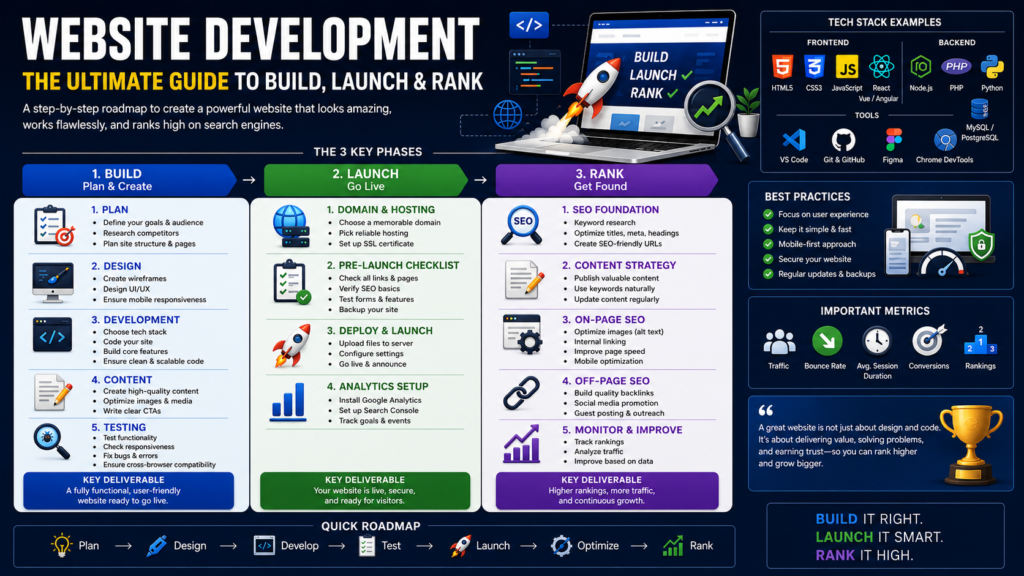
Every business, brand, and creator today needs a strong online home. Website development is the process of building, designing, and maintaining a website, & its one of the most in-demand skills in 2026 you can have or invest in during the digital era.
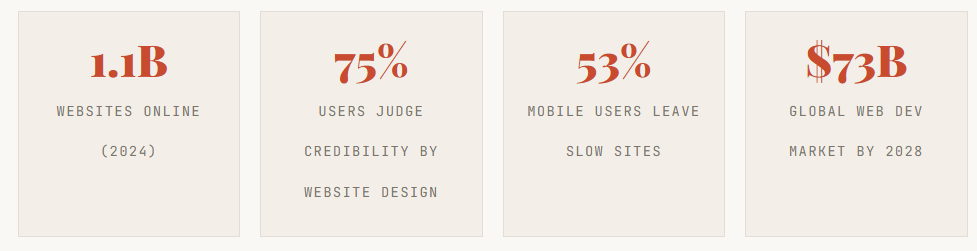
According to a survey (2024), there are 1.1 billion websites in the digital World. Yet fewer than 200 million are actively maintained.
That gap represents a massive opportunity for anyone who gets website development right. The fact that most of them fail to rank well on Google or convert visitors into clients.
This web development guide explores how those elements come together to form functional, engaging, and accessible experiences online, launch, and S.E.O — to ensure you build something that works effectively. It covers the full cycle of proper improvement, from coding to implementation and worldwide accessibility.
What Is Website Development?
Web development is the process of creating, building, and maintaining websites and web applications that run online. Web development is the online representation of your business through which you can expand your business and & avibale in world wide.
Website development typically splits into two major disciplines:
Frontend Development (user Side)creates the UI/UX interface of applications, focusing on structure, design, and interactivity directly within the user’s browser.
Core tech includes HTML for structure, CSS for styling, and JavaScript for behavior.
It ensures a responsive, engaging experience across different devices and web browsers.
Front-end development uses three core technologies:
HTML — structures the content and layout
CSS — controls styling, colors, fonts, and responsiveness
JavaScript — adds interactivity, animations, and dynamic behavior
Back-End Development (Developer’s Side)
Back-end development focuses on the server-side logic,
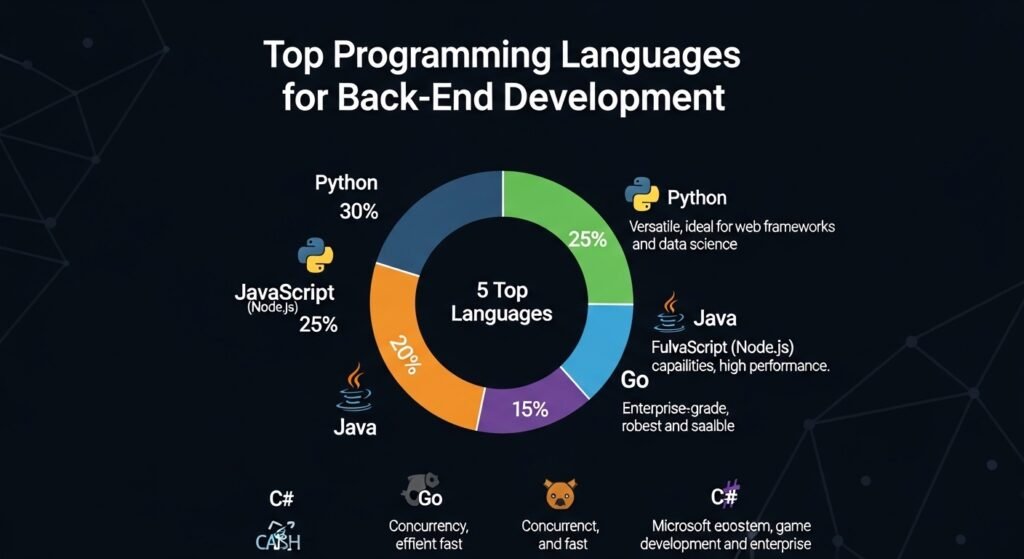
These are some of the back-end programming languages: Python, PHP, Node.js, Ruby, and Java.
databases and APIs that power applications, managing data flow and functionality not visible to website users. It ensures application performance, security, and scalability.
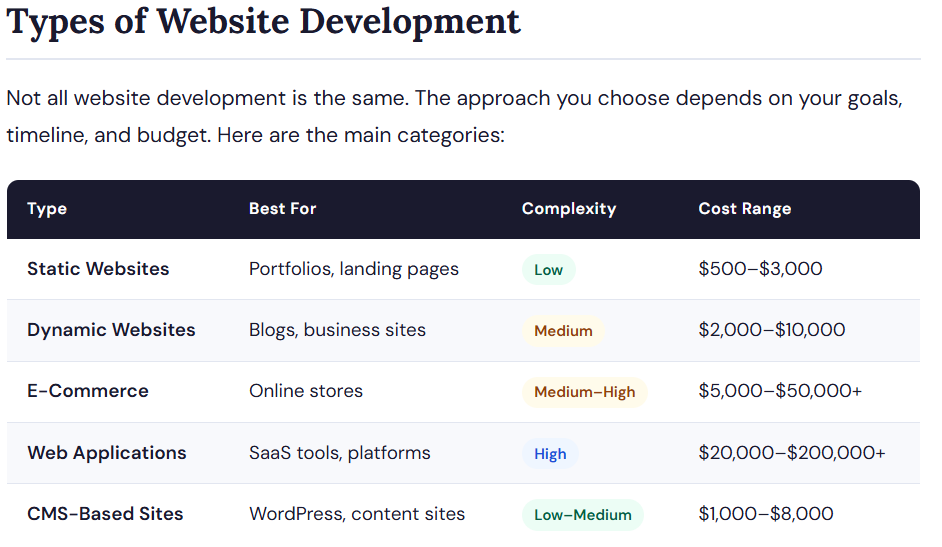
Types of Website Development
Not every website is developed in the same way. The different types of website development help you choose the right way for your project.
| Type | Best For | Tech Stack | Complexity |
| Static Website | Portfolios, landing pages | HTML, CSS | Low |
| Dynamic Website | Blogs, news sites | PHP, CMS, JS | Medium |
| E-Commerce Site | Online stores | WooCommerce, Shopify | Medium–High |
| Web Application | SaaS, tools, dashboards | React, Node.js, APIs | High |
| CMS-Based Website | Business sites, blogs | WordPress, Webflow | Low–Medium |
| Progressive Web App | Mobile-like experiences | JavaScript, Service Workers | High |
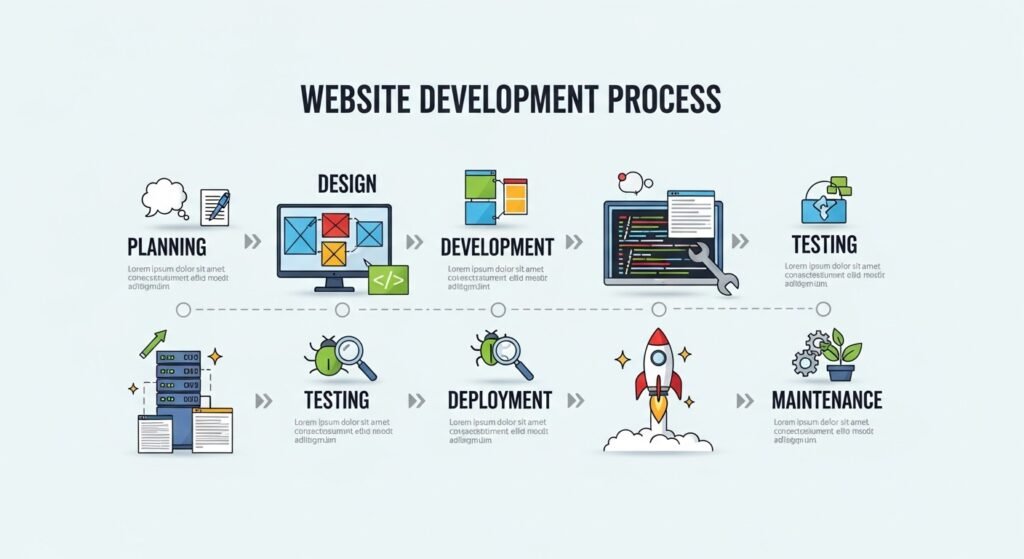
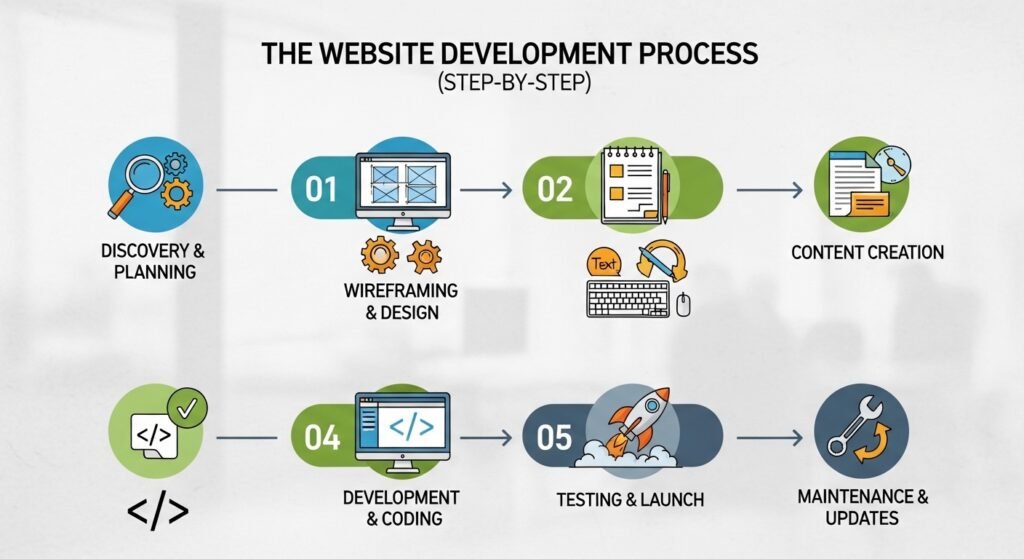
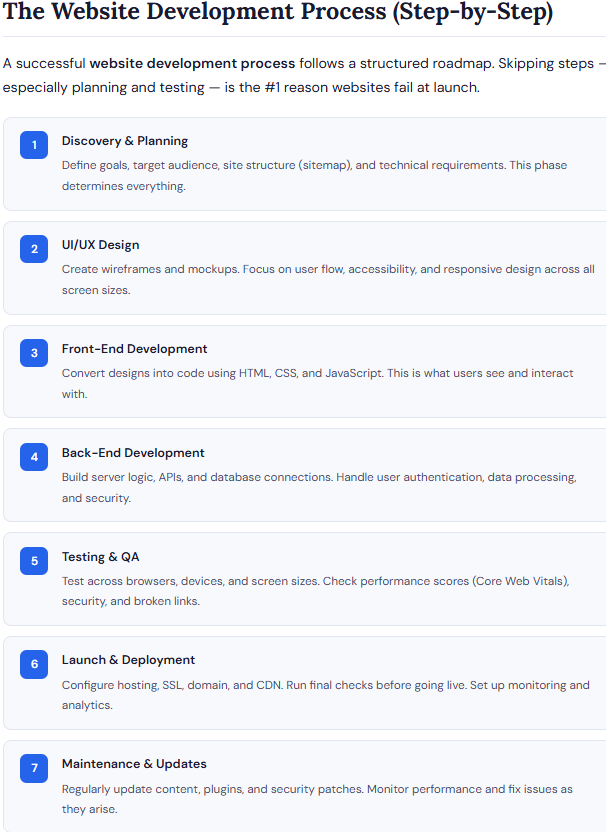
The Website Development Process (Step-by-Step)

Best Technologies & Tools for Website Development in 2026
Choosing the right tech stack is one of the most critical decisions in custom website development. The tools you pick affect performance, scalability, and how quickly you can ship features.
Front-End Frameworks
- React.js — The most popular front-end library. Backed by Meta. Ideal for dynamic UIs and single-page applications (SPAs).
- Next.js — Built on React. Adds server-side rendering (SSR) for better SEO and performance. Highly recommended in 2025.
- Vue.js — Lightweight and easy to learn. Great for smaller projects or teams transitioning from vanilla JS.
- Svelte — Compiles to vanilla JS. Blazing fast. Growing rapidly in the developer community.
Back-End Technologies
- Node.js — JavaScript on the server. Ideal for real-time apps and APIs. Shares language with the front-end.
- Python (Django/FastAPI) — Clean syntax, great for data-heavy applications and AI integrations.
- PHP (Laravel) — Still powers over 75% of the web. WordPress, Magento, and many enterprise CMS platforms run on PHP.
CMS Platforms for Faster Website Development
- WordPress Powers 43% of all websites. Best for blogs, business sites, and e-commerce (with WooCommerce).
- Shopify — Purpose-built for e-commerce. No coding required. Handles hosting, security, and payments.
- Webflow — No-code/low-code platform. Excellent for designers who want development-grade output.
Website Development Cost: What to Expect
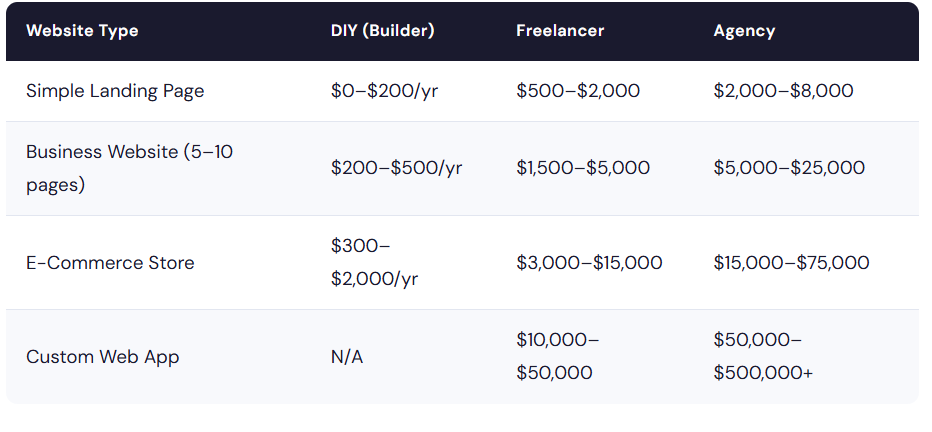
One of the most-searched questions is: “How much does website development cost?” The honest answer: it varies enormously based on complexity, features, and who builds it.
✅ Pro Tip
Don’t judge a developer by price alone. A $500 website that loads slowly, ranks nowhere, and breaks after 6 months costs you far more in lost revenue than a $5,000 professionally developed site.
Expert Tips for Better Website Development
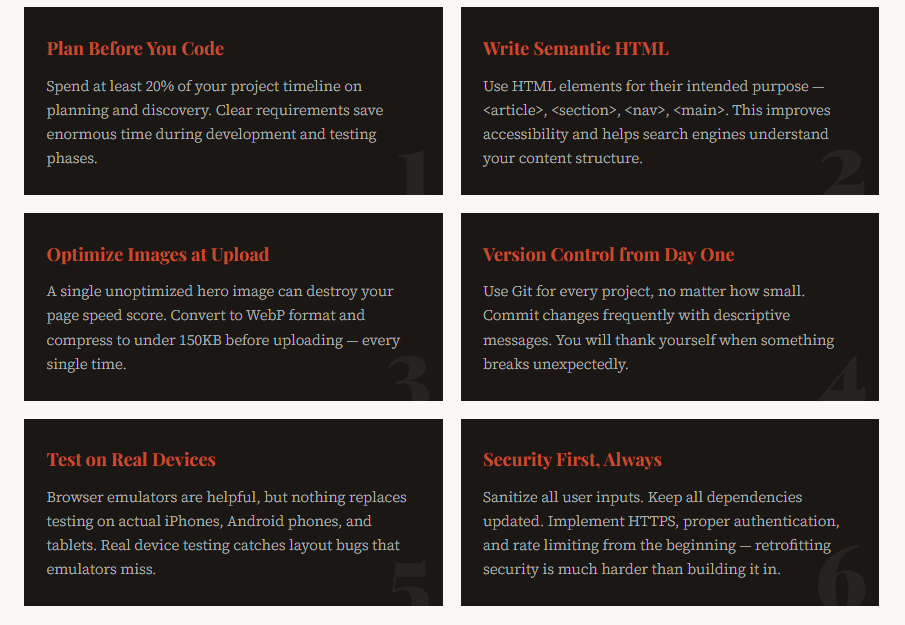
These are the tips that separate average websites from those that actually grow a business:
Conclusion: Build Smarter with Website Development
Website development is one of the most valuable skills and investments in the digital economy. Whether you’re a beginner learning to code, a business owner commissioning a site, or a marketer trying to improve performance, understanding the full development process puts you miles ahead.
The most successful websites aren’t just “built.” They’re strategically planned, technically optimized, and continuously improved. They load fast, look great on every device, and serve a clear purpose for every visitor.
Start with a solid foundation: know your goals, pick the right tools, follow the process, and never stop testing and improving. In 2025, a well-developed website isn’t a luxury — it’s your most important business asset.
🔗 Related Guides on This Blog
Top Web Design Trends to Follow in 2026
How to Choose the Perfect Domain Namehttp://How to Choose the Perfect Domain Name
Best Web Hosting Providers Compared (2025)
http://Best Web Hosting Providers Compared (2026)