what is artificial intelligence

1. Introduction — What Is Artificial Intelligence?

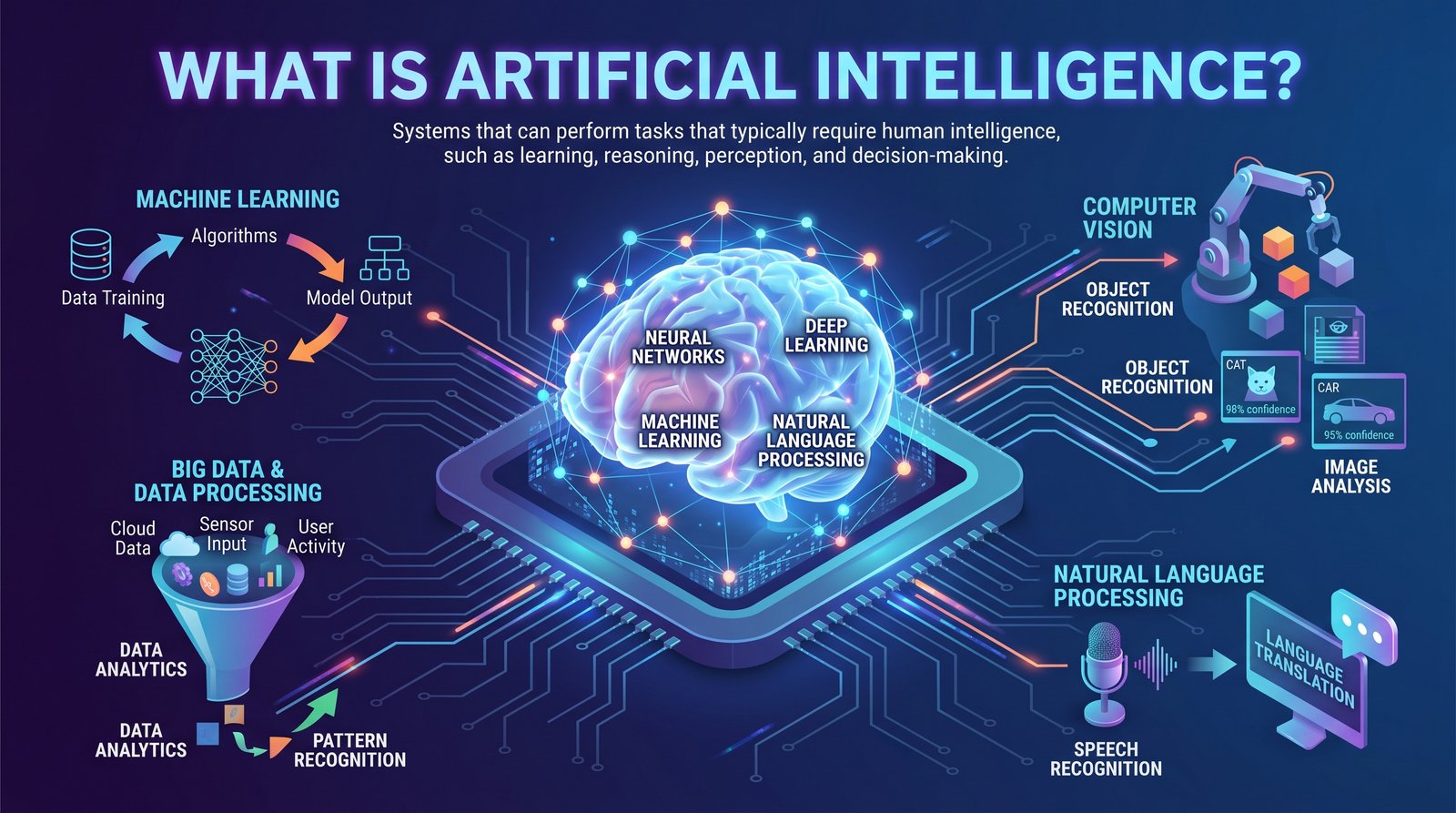
Artificial intelligence is no longer a concept locked inside science-fiction novels. It lives in your smartphone, powers the recommendations you see on streaming platforms, and is quietly reshaping industries from farming to finance. In the simplest terms, artificial intelligence is the ability of a computer system to perform tasks that would normally require human intelligence — things like understanding language, recognizing images, solving problems, and making decisions. But AI is much more than a clever trick. It represents one of the most significant technological shifts in human history. Whether you are a student, a business owner, a developer, or just a curious person, understanding artificial intelligence today is no longer optional — it is essential. This guide breaks down everything about AI in plain English. You will learn how it works, where it is being used right now, what the future holds, and how you can use it to your advantage — all without getting lost in technical jargon.
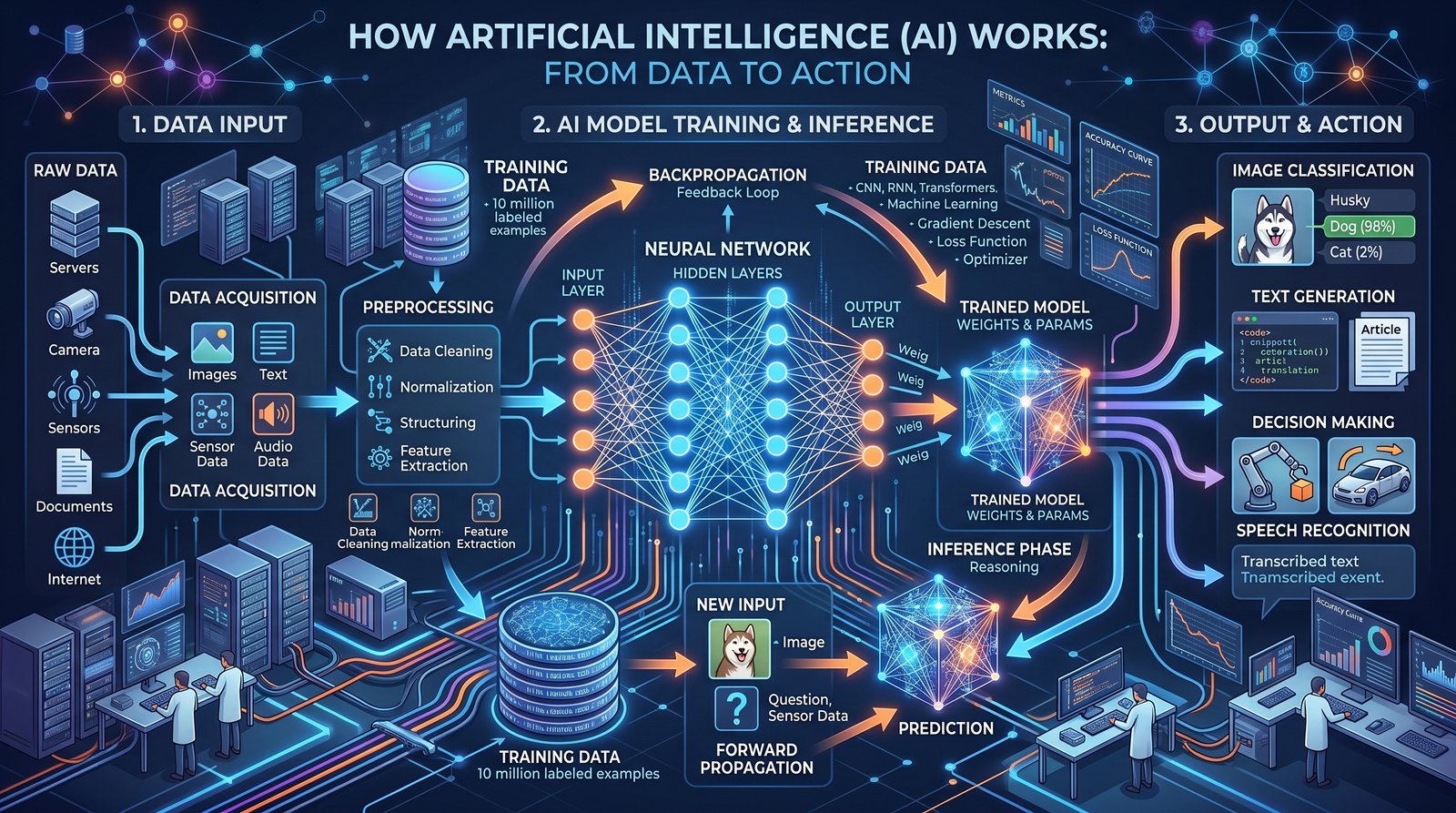
At its core, artificial intelligence works by learning from data. Instead of being programmed with rigid
rules for every situation, an AI system is trained on massive datasets and learns to identify patterns,
make predictions, and improve over time.


3.1 The Role of Data
Data is the fuel of AI. The more high-quality data a system has access to, the more accurately it can
learn. Think of it like teaching a child to recognize dogs — after seeing thousands of photos of


different dog breeds, they can identify a dog they have never seen before. AI works the same way. 
3.2 Machine Learning and Neural Networks
Machine learning is the most widely used branch of AI. Instead of following hardcoded instructions,
Machine learning algorithms find patterns in data and build models that make predictions. Deep
learning, a subset of machine learning, uses artificial neural networks — structures inspired by the
human brain — to process information in multiple layers, enabling breakthrough performance in tasks
like image recognition and natural language processing (NLP).
A neural network has three main parts:
• Input Layer — receives raw data (text, images, numbers)
• Hidden Layers — process and transform the data through mathematical operations
• Output Layer — delivers the final prediction or classification
how atrfiacl intelgenesce work

Generative AI — The Game-Changer

Key capabilities of generative AI tools include:


  • Drafting emails, reports, and marketing copy in seconds

  • Writing and debugging code across dozens of programming languages

  • Creating photorealistic images from text descriptions

  • Translating languages and summarizing long documents

  • Building customer-facing chatbots and virtual assistants

If one single development has captured global attention in recent years, it is generative AI. Tools like
ChatGPT, Claude, Midjourney, and Google Gemini can generate text, images, code, audio, and
video from simple prompts. This is a fundamentally different use of artificial intelligence — instead of
just classifying data, these models create new content.
Generative AI is built on Large Language Models (LLMs) and diffusion models trained on
enormous datasets. The results are impressive — but they also raise serious questions about
accuracy, copyright, misinformation, and job displacement

Projected global AI market by 2030
0 T+
of devices use AI features
0 %
jobs to be impacted by AI globally
0 M
new AI-related jobs by 2026
0 M

Artificial Intelligence in Healthcare

medical imaging and diagnosis

Medical Imaging and Diagnosis

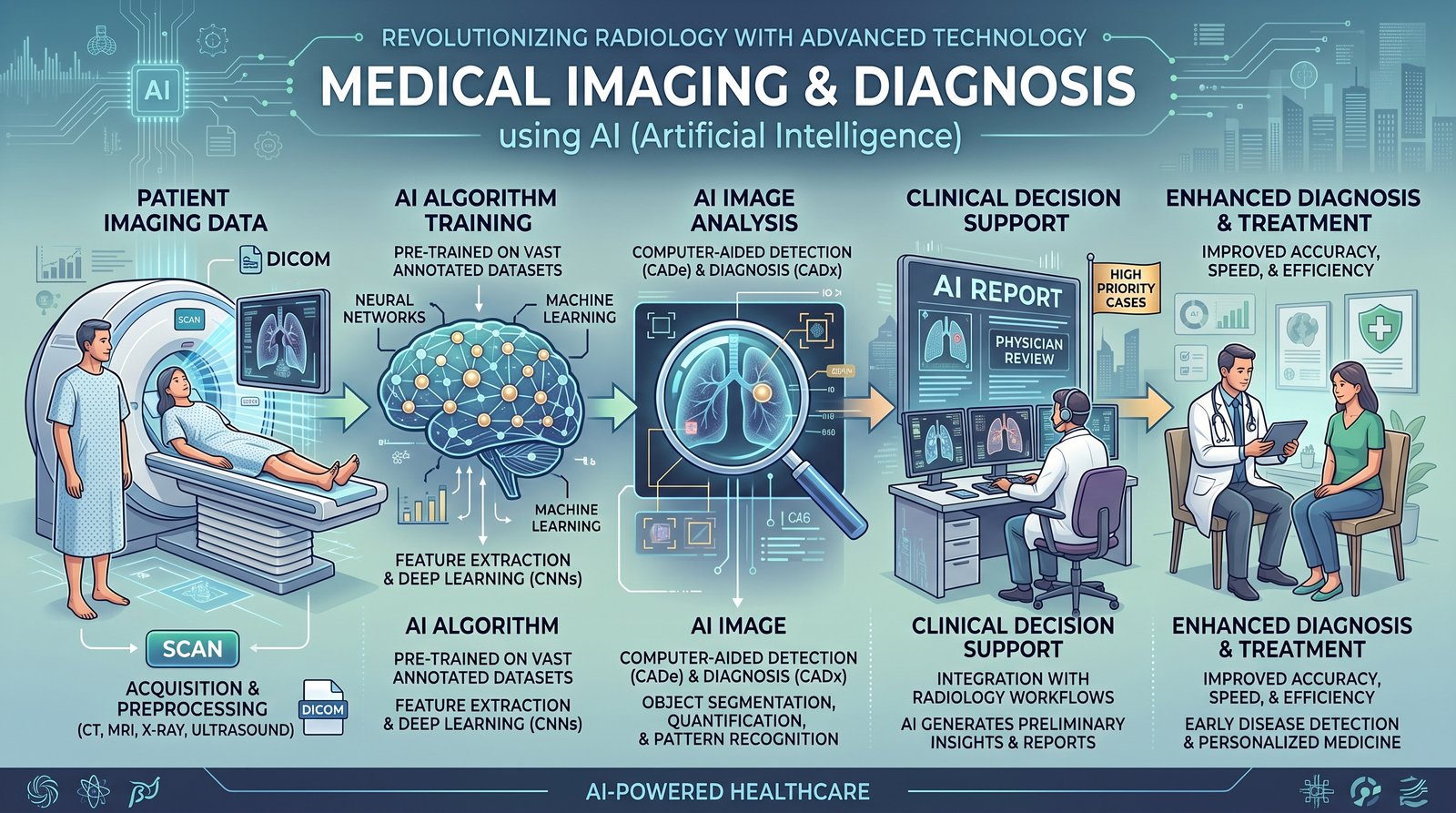
Google's DeepMind AI can detect over 50 eye diseases from retinal scans with accuracy matching top specialist doctors. Similarly, AI models have demonstrated the ability to detect breast cancer from mammograms with fewer false positives than radiologists, according to a 2020 study published in Nature.
drug discovery usig artifcial integles 202605111112

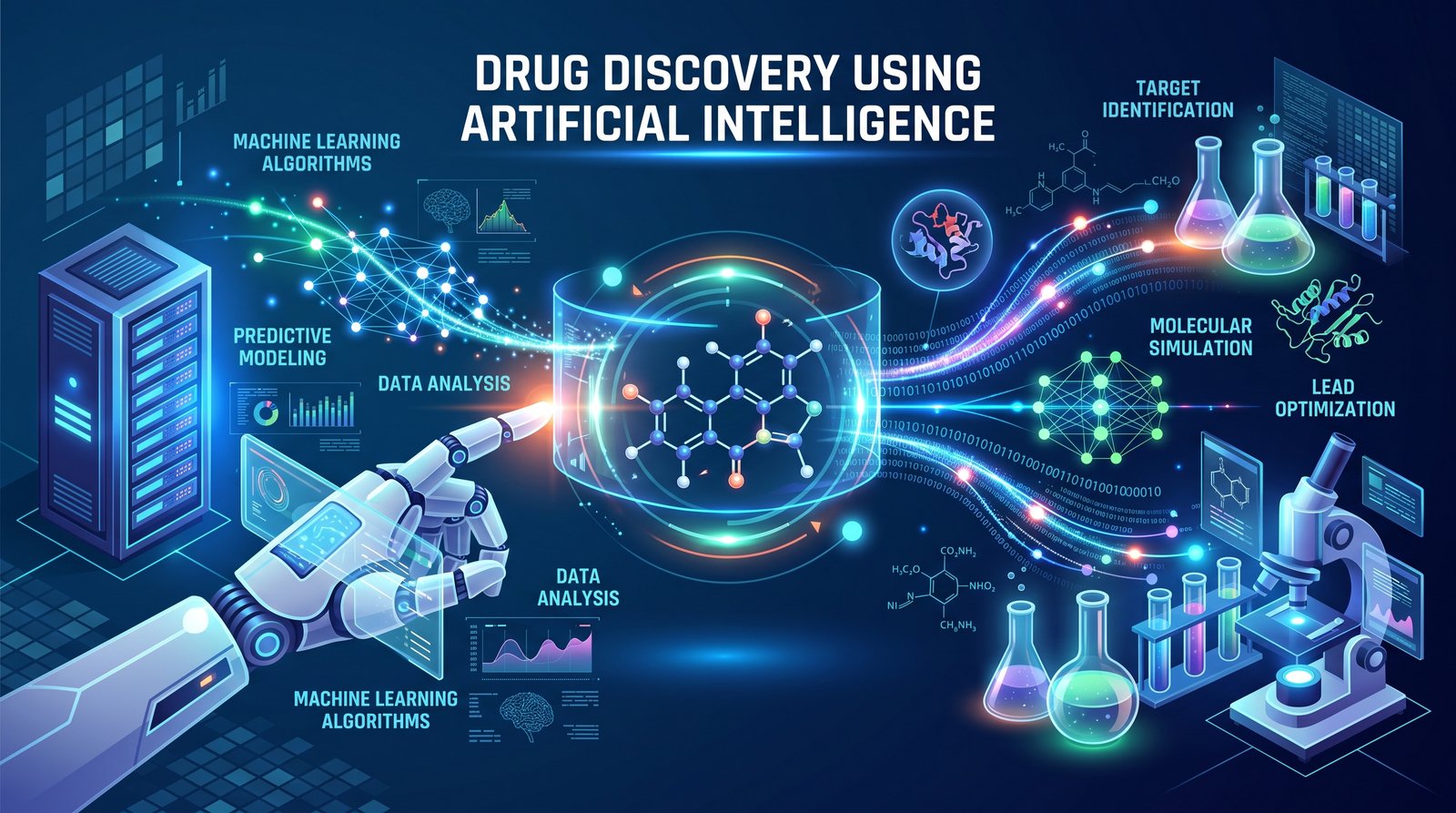
Drug Discovery

Traditional drug discovery can take 10–15 years and cost over $2.6 billion per drug. AlphaFold, an AI developed by DeepMind has already predicted the 3D structure of over 200 million proteins — a breakthrough that could cut drug development timelines dramatically and lead to cures for diseases that have stumped researchers for decades.
mental health support

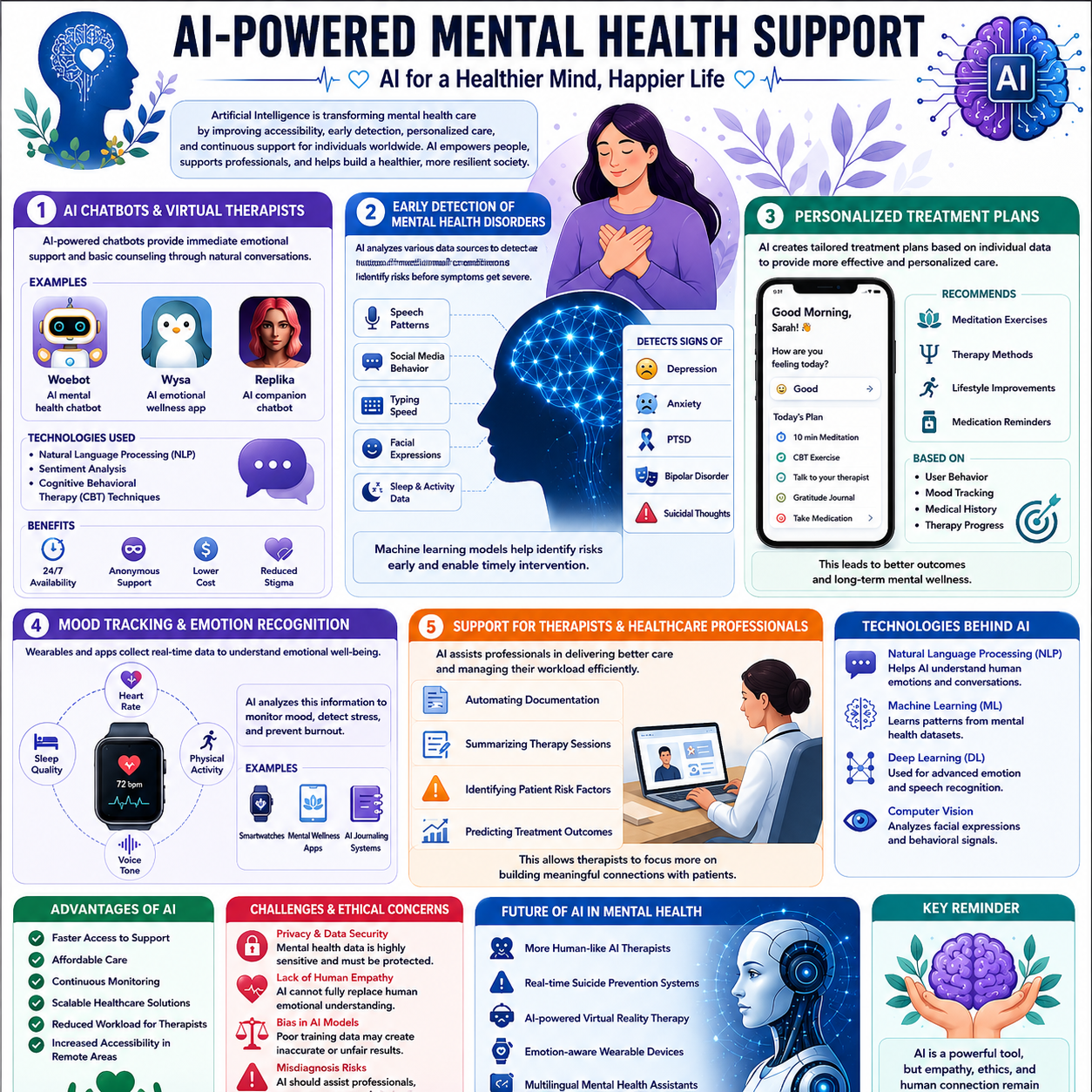
Mental Health Support

AI-powered mental health apps like Woebot and Wysa use cognitive behavioral therapy techniques to provide 24/7 emotional support to users. While they are not replacements for human therapists, they serve as an accessible first point of contact for millions who cannot access professional care
Real-World Applications of Artificial Intelligence

9. Expert Tips for Leveraging Artificial Intelligence

The Future of Artificial Intelligence
The trajectory of artificial intelligence points toward systems that are more capable, more
autonomous, and more integrated into everyday life. Here are the major trends shaping AI's future:

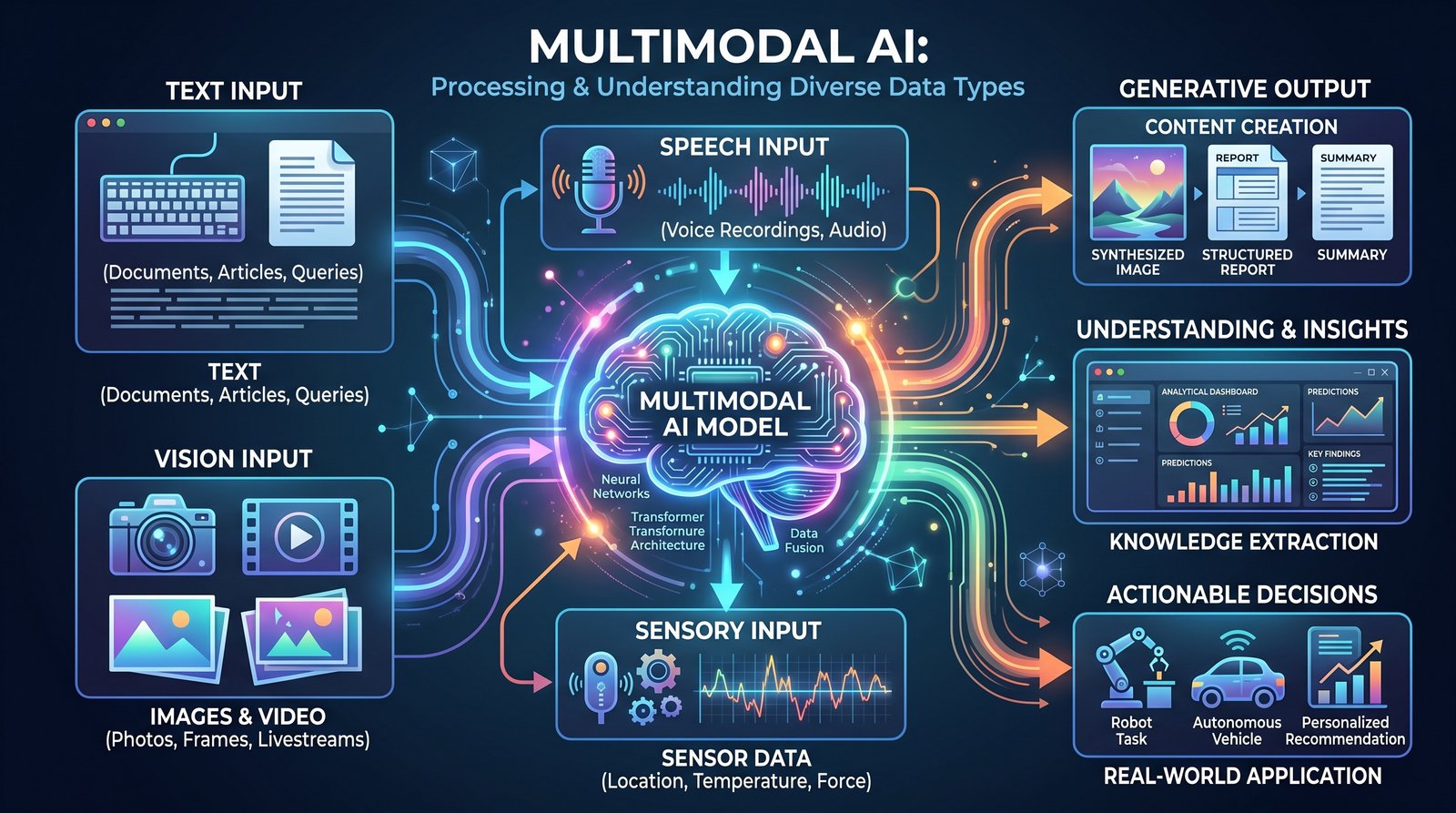
1. Multimodal AI
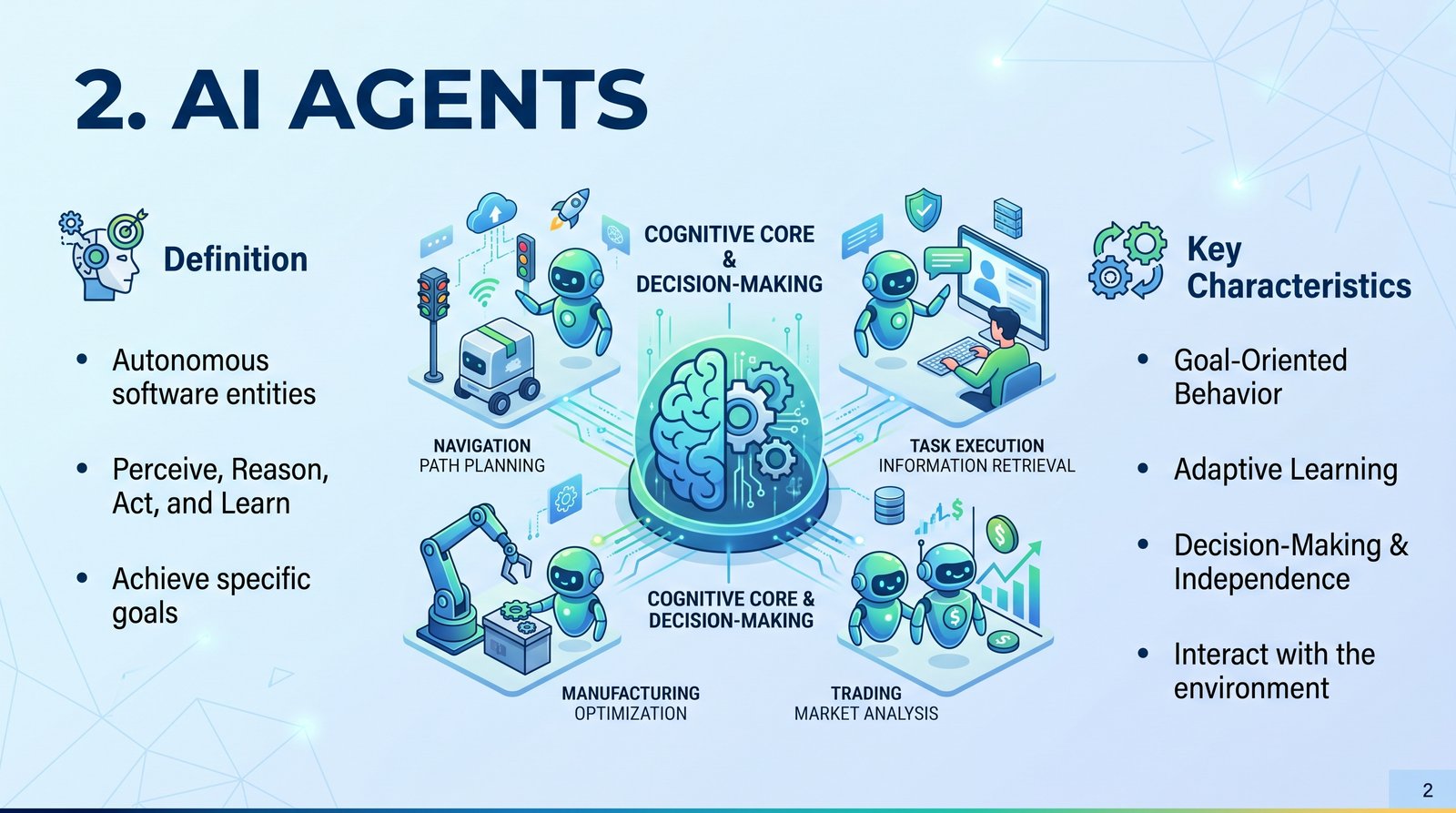
2. AI Agents
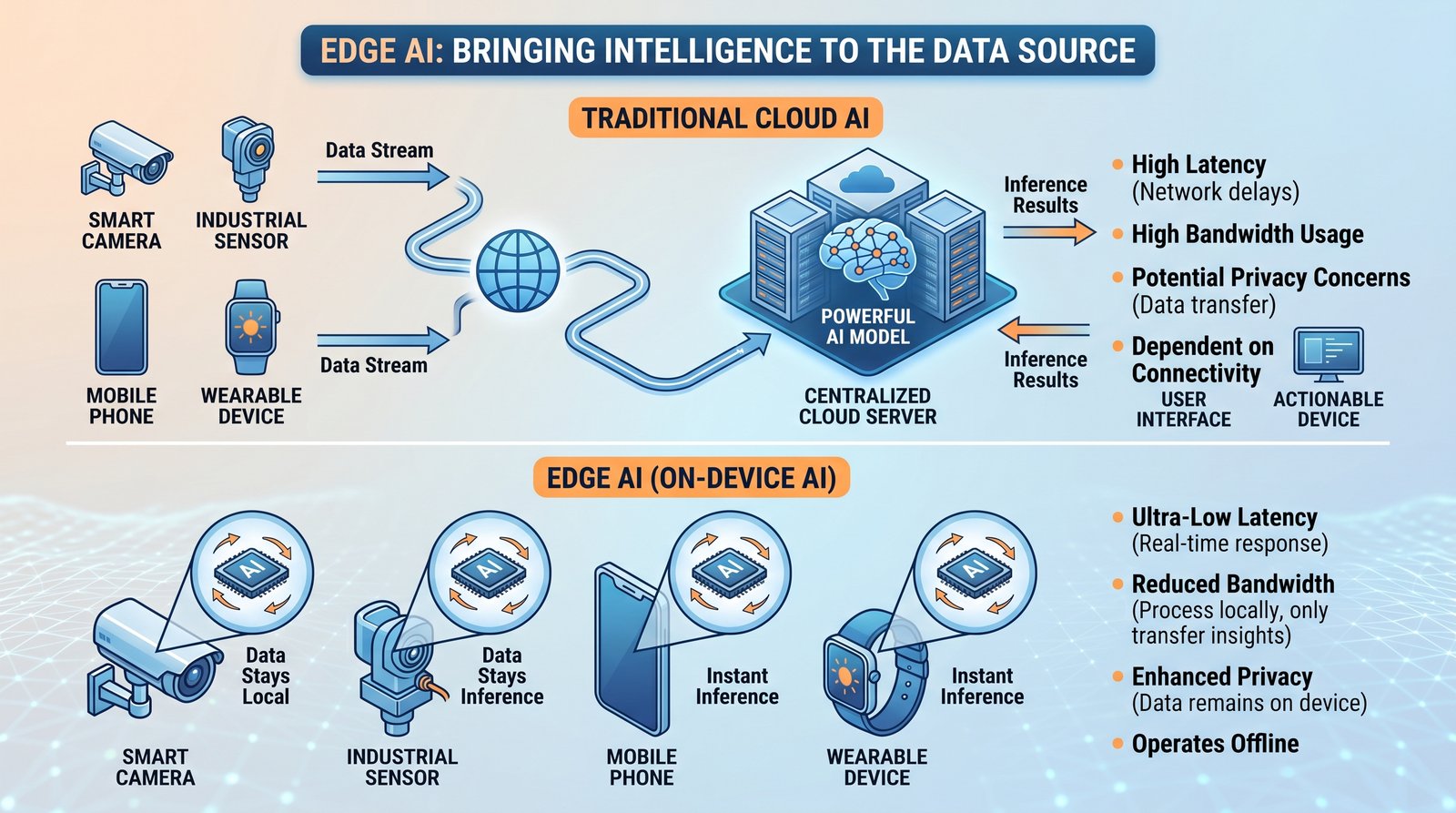
3. Edge AIFirst Product Launch
4. AI in Scientific Research

A: Artificial intelligence is the ability of a computer program or machine to think, learn, and solve

problems in a way that mimics human intelligence. It covers everything from recognizing your face

to translating languages to writing essays.

A: AI carries risks — including bias, misinformation, job disruption, and misuse by bad actors.

However, with proper regulation, ethical design, and human oversight, the benefits of AI

significantly outweigh the dangers. The key is responsible development and governance.

A: The most widespread AI applications include virtual assistants (Siri, Alexa), content

recommendations (Netflix, YouTube), fraud detection in banking, GPS navigation, spam filtering,

medical diagnostics, and language translation tools

A: AI will automate many repetitive and routine tasks, displacing certain roles. However, it will also

create new jobs that require uniquely human skills — creativity, empathy, strategic thinking, and

ethical judgment. Upskilling and adaptability are the best protections against AI-driven job

changes

A: Great free starting points include Google’s Machine Learning Crash Course, Andrew Ng’s AI For

Everyone course on Coursera, fast.ai for practical deep learning, and MIT OpenCourseWare. You

don’t need a math degree — start with the concepts and build from there

13. Conclusion

Artificial intelligence is not a trend — it is a transformation. From the way we receive medical care to

how we create content, learn new skills, and run businesses, AI is reshaping the fabric of modern

society at a pace that shows no sign of slowing.

The good news is that you do not need to be a data scientist or engineer to benefit from this

revolution. Understanding the basics of artificial intelligence — how it works, where it is applied, and

what its limits are — puts you in a position of power rather than uncertainty.

The organizations and individuals who thrive in the AI era will not be those who fear it, nor those who

blindly trust it. They will be the ones who engage with it critically, use it purposefully, and keep human

values at the center of every decision

FAQ

14. Media Suggestions, Internal Links & Authority Sources